When a broken sewer pipe starts failing, it rarely gives you a polite warning. It shows up as smells, weird sounds, and that sinking feeling that something under the floor is about to get expensive. If you’ve been asking how to know if the sewer line is broken, you don’t need more generic advice. You need the specific signs we see in NYC, plus the technical “why” behind each one, so you can act before the mess spreads.
We’ll walk through seven symptoms that usually mean a broken sewer line, not just a slow drain. Then we’ll explain what to do next and how to prove the problem before we dig.
In NYC, the private sewer lateral from your building to the city sewer main is often the owner’s responsibility, and it may run under sidewalk concrete, a stoop, or tight utility corridors. For most underground work, you also want a licensed master plumber who can handle permits and inspections correctly. That makes sewer line damage a planning problem, not just a plumbing problem.
The city’s network is huge, roughly 7,500 miles of sewer lines and about 148,000 catch basins. During heavy rain or snowmelt, pressure in the system rises. If your private line has weak joints, internal corrosion, or a low spot, broken sewer line symptoms show up fast. DEP also points out a very NYC cause: blocked pipes from improper disposal of grease, wipes, and other non-flushables. Those blockages act like a “starter motor” for bigger failures, especially in older clay or cast iron.
When you see the signs below, assume it is structural until a camera proves otherwise.
One slow sink can be local. The big red flag is when the toilet, tub, and kitchen sink all slow down together. Those are classic signs of broken sewer line trouble because all those fixtures share the same main exit path.
Technically, this happens when the main loses its smooth flow. A belly (a low spot that holds water), an offset joint (pipe ends no longer aligned), or heavy cast iron scaling makes the pipe behave like it is “too full” all the time. That rising internal water level is one of the most reliable signs of a broken sewer line.
If the toilet glugs, drains bubble, or the bowl water bounces after a flush, don’t ignore it. These are common signs of a broken sewer pipe because the system is pushing air backward through traps.
Here’s the simple mechanic: a flush pushes air ahead like a piston. If the main can’t pass the flow, that air looks for an escape route, and you hear it. In older NYC buildings with a house trap, symptoms can feel random, but they’re often still pointing to signs of a broken sewer pipe in the main run.
A sewer smell that comes and goes is not “just NYC.” If odor increases after showers, laundry, or dishwashing, treat it like a warning. It can mean pressure is pushing sewer gas back because flow and venting are not behaving normally.
This often connects to signs of a cracked sewer pipe or a separated joint where gas escapes and gets pulled into the building envelope. If you also have damp spots or recurring clogs, we start suspecting a broken sewage pipe section, not a simple trap issue.
When the main can’t carry the flow away, wastewater rises to the lowest opening: a basement floor drain, a low shower, or a laundry standpipe. That’s why basement events are such strong signs of broken sewer line conditions.
And yes, people ask the uncomfortable question: Is a broken sewer line dangerous? It can be. Sewage is contaminated water. Stop using water in the building until you get help, because every flush can add volume and spread contamination.
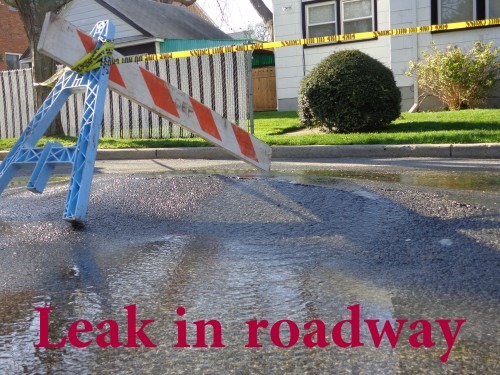
Even in the city, the outside can talk. A wet area in dry weather, a new depression, or concrete that starts dipping can be signs of sewer line damage outside the walls.
The technical part most owners never hear: small leaks wash out fine soil and create voids. Once the bedding support is gone, the pipe shifts, joints separate, and small signs of sewer line problems turn into structural failures. If you see this plus indoor symptoms, assume the line needs inspection.
If a “clog” returns in days or weeks, that is a strong signal of structure, not just buildup. Recurring backups are classic signs of bad sewer pipe conditions in NYC, especially with clay joints and corroded cast iron.
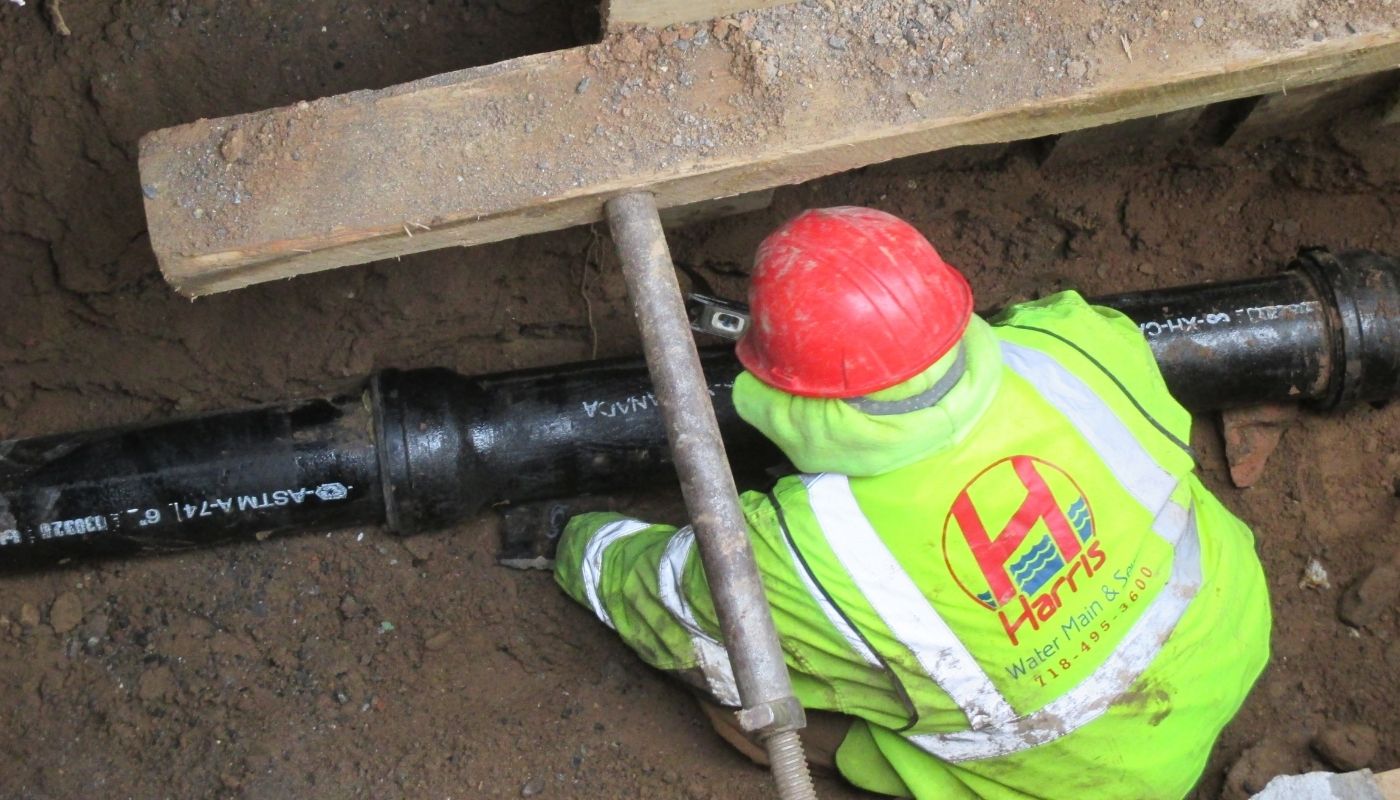
On camera, we often find root intrusion at joints, a shifted connection that hooks paper, or internal scaling that narrows the pipe until debris can’t pass. At that point, repeated snaking is not a fix. Those repeated events are signs that sewer line repair should start with evidence, not another temporary clearing.
If you have a cleanout or trap access, check it. Wetness, staining, or standing water when no fixtures are running often points to a line holding water. That can be a belly, an offset, or a partial collapse.
This is also where a failing interior section can look like a broken drain pipe, even though the real issue is downstream. If you’re trying to confirm how to know if the sewer line is broken, this is a moment to stop guessing and get a camera in the line.
If you’re seeing signs of sewer line damage, here’s the practical “do this now” list we give homeowners:
Disclaimer: This article is general and may not reflect NYC requirements. For NYC-specific guidance, contact Harris Water Main & Sewer Contractors.
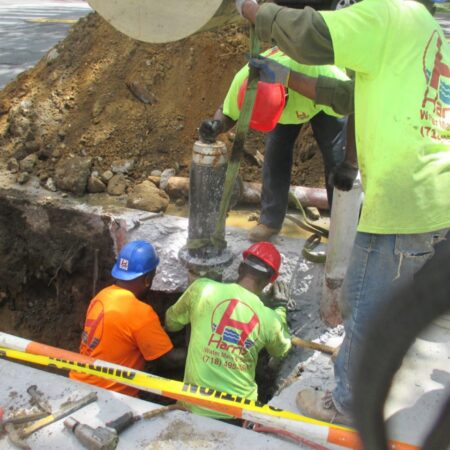
When you call us at Harris Water Main and Sewers, we keep it simple: we prove what’s causing the broken sewer pipe, then we fix the exact spot (or the full line) the right way so the same sewer line damage doesn’t keep coming back.
If you’re seeing signs of sewer line problems and want help from a team that does this work every day across Brooklyn, Queens, Manhattan, the Bronx, and Staten Island, contact us. We’ll provide a real answer and a real fix.